
Cohort learning for climate-focused businesses: Navigating Indonesia’s evolving policy landscape
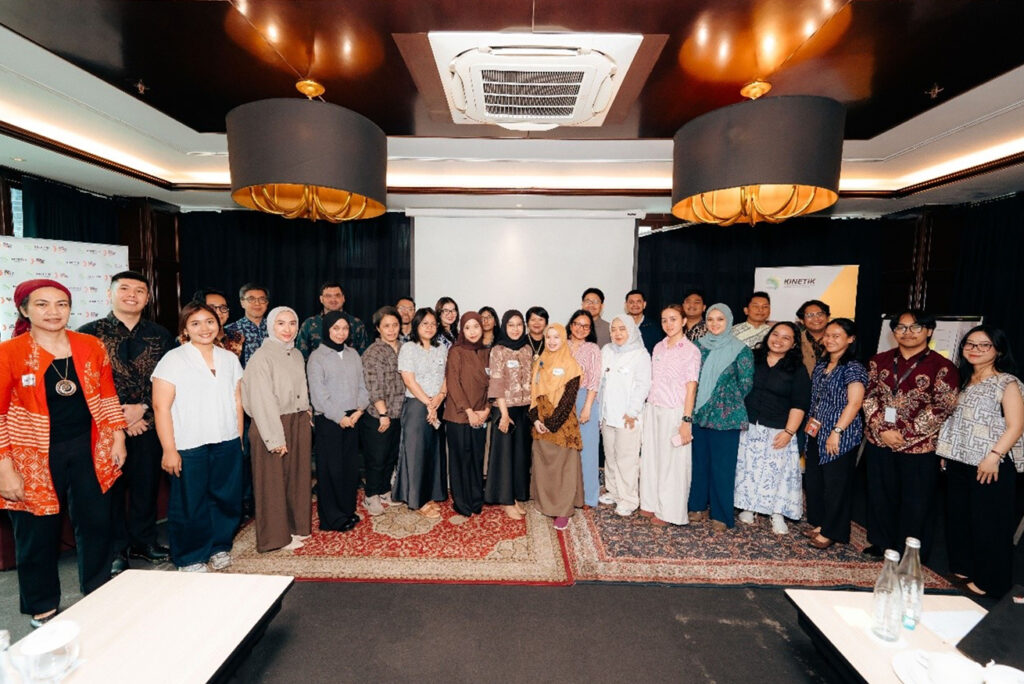
Participating companies attended the training in April 2026 in Jakarta, Indonesia.
Indonesia’s changing climate policies are creating opportunities for businesses working in renewable energy, emissions reduction and other climate solutions. But keeping pace with new regulations, reporting requirements and policy shifts can be difficult for businesses operating in this space.
Australian Development Investments (ADI) and KINETIK brought climate-focused businesses together in Jakarta to explore Indonesia’s evolving climate and energy policies. Facilitated by New Energy Nexus, the workshop aimed to help businesses understand the policies affecting their sectors, identify regulatory barriers and consider opportunities arising from Indonesia’s evolving climate-policy environment.
Mapping Indonesia’s evolving climate policies
Indonesia is introducing new regulations, strengthening emissions registries and developing carbon-pricing mechanisms. Monitoring and reporting systems are also improving, helping increase the transparency and accountability of climate initiatives.
However, climate governance remains complex. Responsibilities are spread across different ministries and subnational governments, and policy changes can affect sectors and businesses in different ways.
For climate-focused small and medium-sized enterprises (SMEs), understanding these changes is important. Supportive policies can create opportunities for new technologies and business models, while sudden or inconsistent changes can make it harder for companies to plan and grow.
The workshop formed part of the technical assistance provided by ADI and KINETIK. It focused on building businesses’ understanding of the policy environment rather than providing formal legal or regulatory advice.
Connecting policy with business realities
The workshop brought together businesses supported by ADI and KINETIK, including SolarKita, Nusacube, Saka Total Energy Management, CarbonEthics, Investasi Hijau Selaras, Xurya Daya Indonesia, Avisena Healthcare Group and WaterHub.
While these businesses work across different sectors, each is affected by Indonesia’s climate policies and the wider transition towards a lower-carbon economy.
The sessions explored renewable-energy policy, industrial decarbonisation and climate governance. Speakers examined how regulatory change can create opportunities for climate businesses while also presenting practical barriers to their operations and growth.
Balancing decarbonisation with energy needs
Beyrra Triasdian, Renewable Energy Manager at Trend Asia, outlined the practical challenges involved in transitioning Indonesia’s energy system.
Economic growth and decarbonisation must co-exist. Existing infrastructure, industrial needs and long-standing patterns of energy dependence cannot change overnight. Communities must also continue to have access to reliable and affordable energy throughout the transition.
As Triasdian noted, “Energy dependency is closely tied to the needs of communities. This is actually where climate businesses have room to innovate by providing solutions that are contextual and relevant to local realities.”
Renewable-energy opportunities also extend beyond rooftop solar and electricity supplied through the national grid. Bioenergy, geothermal energy, hydropower, ocean energy and community-based renewable solutions all hold significant potential.
One example discussed during the workshop was the use of micro-hydro systems in Yogyakarta. These systems helped households reduce electricity costs while continuing to draw on power supplied by Indonesia’s state electricity company, PLN, rather than replacing it entirely.
The example showed how renewable-energy solutions can work alongside existing infrastructure while responding to local needs.
Understanding the effects of regulatory change
Triasdian also highlighted how regulatory shifts have affected clean-energy entrepreneurs and SMEs.
Rooftop-solar businesses grew rapidly in 2018 and 2019, when government regulations supported the sector and made commercial electricity sales possible.
When the policy environment changed, many of these business models became more difficult to sustain. Some initiatives slowed down or stopped completely.
The experience showed how sudden and inconsistent regulatory changes can directly affect the growth of renewable-energy businesses in Indonesia.
For SMEs, understanding these changes is an important part of identifying barriers and considering how policy decisions may affect their operations.
Identifying opportunities for green industry
Abi Prionggo, Project Manager Energy and Industry at Climateworks Centre, examined the growing importance of industrial decarbonisation as Indonesia works to maintain economic growth while meeting its emissions-reduction targets.
For Prionggo, innovation will be central to that transition: “Transition to low-carbon industry will not happen without innovation.”
Climate businesses can contribute through clean-energy solutions, energy storage, industrial efficiency, digitalisation, carbon measurement and circular-economy models.
These areas may create opportunities for climate-focused SMEs as industries respond to changing policies and work to reduce their emissions.
Connecting global commitments with national policy
Robin Daniel Nainggolan, from the Climate and Decarbonisation Division of the Indonesian Center for Environmental Law, explored how global climate commitments influence policy in Indonesia.
These commitments include the Paris Agreement and decisions made through the Conference of the Parties, commonly known as COP, the United Nations climate conference.
Nainggolan explained the link between international negotiations and domestic policy: “COP is important for those who work in climate governance, because decisions made at the global level can influence climate finance and guide policy direction across sectors in Indonesia.”
However, the energy transition cannot depend on policy targets alone. It also requires strong climate governance, clear regulations and consistent implementation.
For climate-focused SMEs, Indonesia’s nationally determined contribution, emissions-trading systems, carbon-market mechanisms and carbon registries may create new opportunities.
A nationally determined contribution, or NDC, sets out a country’s climate commitments under the Paris Agreement. Emissions-trading systems, carbon markets and registries support the recording, management and trading of emissions reductions and other climate activities.
Nainggolan emphasised that these opportunities can only be realised when businesses operate in a policy environment that is clear, transparent and predictable.
Supporting climate-focused businesses to navigate change
Indonesia’s climate transition is creating opportunities for businesses that can provide relevant and practical solutions. At the same time, companies must navigate changing regulations, different levels of government and a complex climate-governance system.
The workshop aimed to help businesses understand the policies affecting their sectors, identify regulatory barriers and consider opportunities arising from Indonesia’s evolving climate-policy environment.
Through technical assistance, ADI and KINETIK are supporting climate-focused businesses to better understand the environments in which they operate and consider how their plans align with Indonesia’s climate goals.
Clear and consistent climate governance, together with business solutions that respond to local realities, will be important to the growth of climate-focused businesses in Indonesia.
View highlights from ADI’s cohort learning workshop, bring portfolio companies together to share knowledge and strengthen business practices.
To learn more about how ADI supports climate-focused businesses through investment and technical assistance, contact the ADI team.